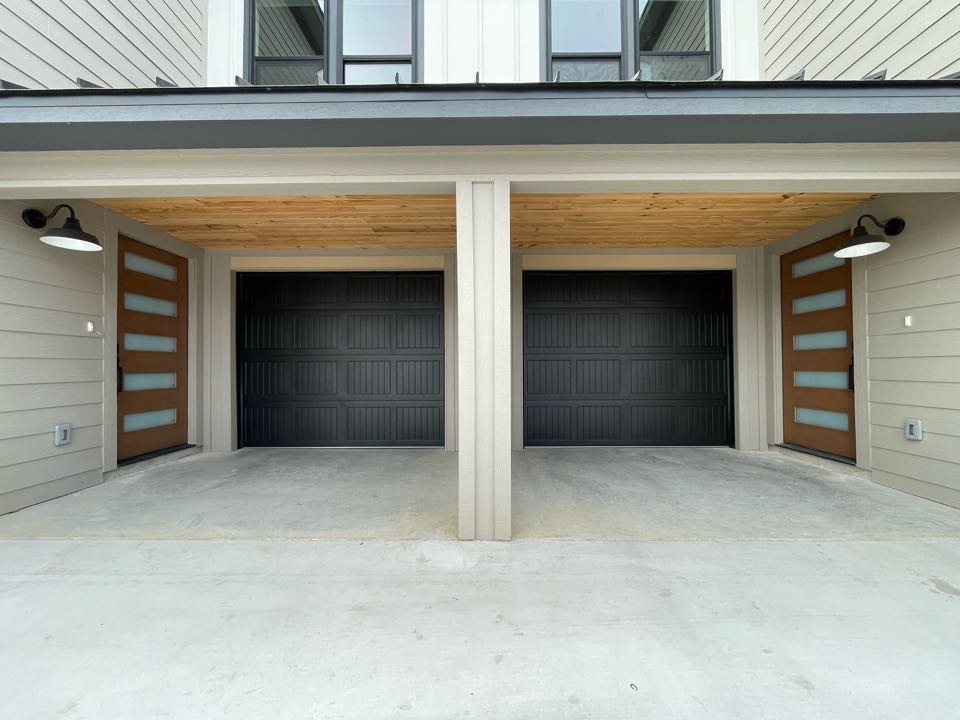
Every July my phone rings with the same kind of call. A door that worked fine all spring suddenly won’t close in the afternoon, or quits halfway, or the opener acts possessed once the sun is high. The common thread is heat. Garage door problems in summer are some of the most predictable ones I see, because a closed-up garage in the Hill Country can hit 110 degrees or more, and a garage door is a big assembly of metal that expands, contracts, and gets tired in that kind of heat. I’m Shelby Palmer, founder of FixDoor in Marble Falls, and here’s what I watch for from Burnet to Horseshoe Bay every summer.
Your opener can overheat and quit mid-cycle
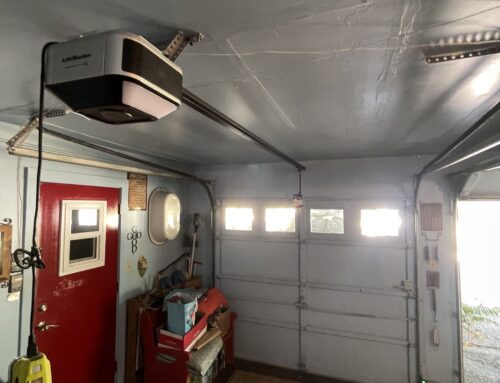
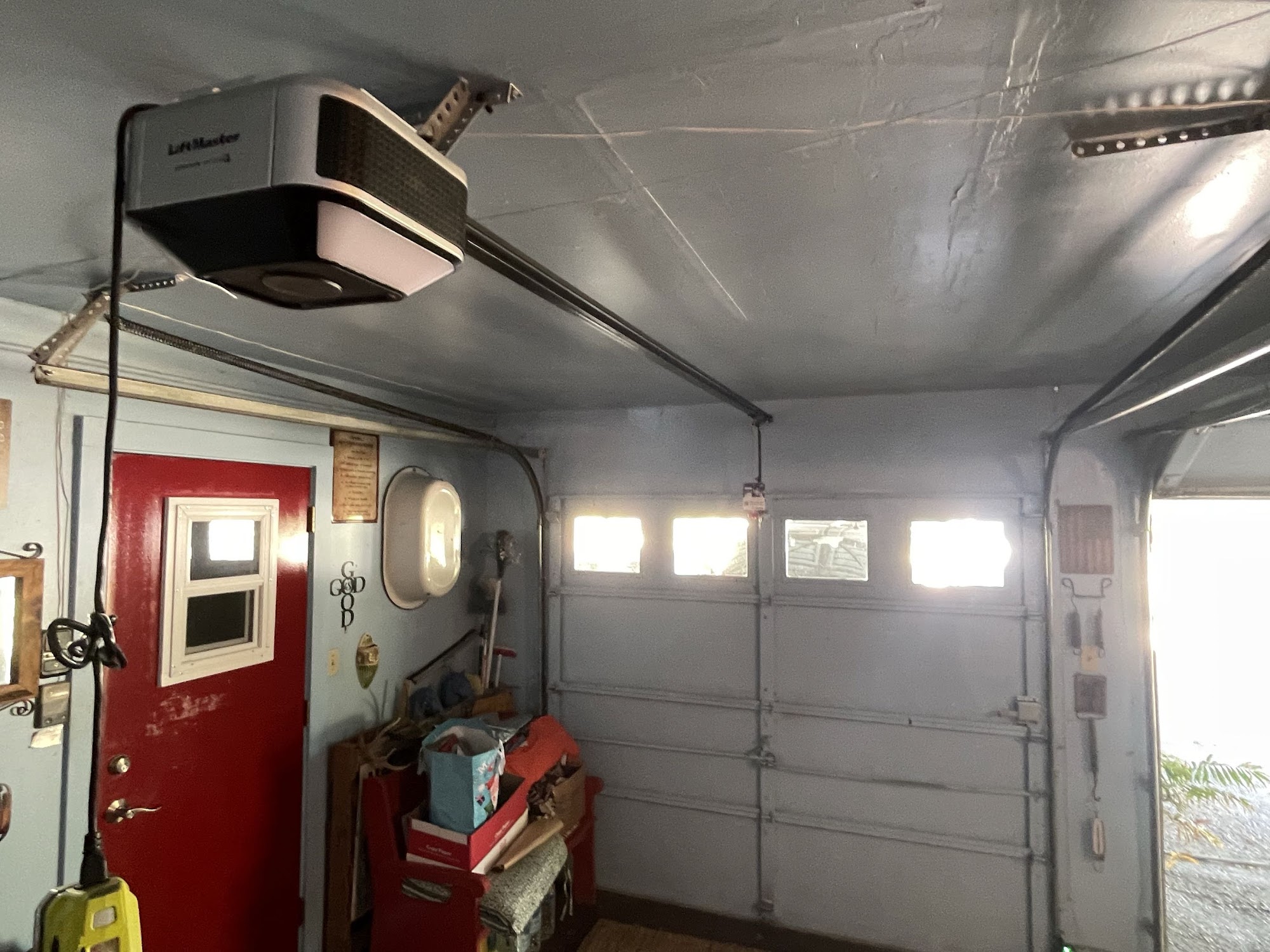
Garage door openers have a thermal cutoff built in to protect the motor. In a garage that’s pushing triple digits, running the door several times in a short window, say everyone leaving for work and the lawn crew coming and going, can be enough to trip that cutoff. The door stops responding, people assume it’s broken, and then it works fine that evening once things cool down.
If your opener only acts up in the heat of the day, that’s a strong clue. Sometimes it’s just heat and ventilation, sometimes it’s a motor on its way out that the heat is exposing early. A quick garage door opener repair visit can tell you which.

Sensors drift out of alignment in the sun
Those low safety sensors I’m always preaching about have a summer weakness too. As the metal brackets and tracks heat up, they expand and shift, and a sensor that was aimed perfectly in March can drift just enough to lose its beam. On top of that, low afternoon sun can shine straight into a photo eye and wash out the signal entirely.
The symptom is a door that won’t close in the afternoon, often with a blinking light on the opener, that mysteriously behaves again at dusk. Before you assume the worst, a sensor alignment is usually all it takes. Please don’t tape over them to force it closed in the meantime. Our full garage door safety test walks through how those sensors are supposed to work.
Heat is hard on springs and metal
Metal expands in heat and contracts when a cold front rolls through, and our summers swing hard. That constant expansion and contraction stresses springs, tracks, and rollers, and it speeds up the fatigue that eventually snaps a spring. Heat also thins out lubricant, so parts that should glide start grinding. A spring that was going to fail this year will very often choose a brutal August afternoon to do it.
This is why a little lubrication and a balance check before peak summer pays for itself. It’s the same logic as changing your oil before a long haul instead of after the engine knocks. If a spring does let go, here’s what a broken garage door spring looks like and why you shouldn’t touch it.
Wood and painted doors take a beating
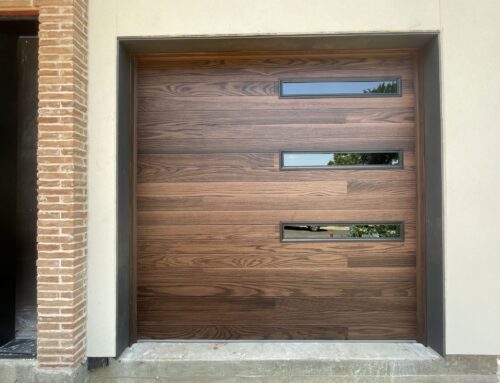
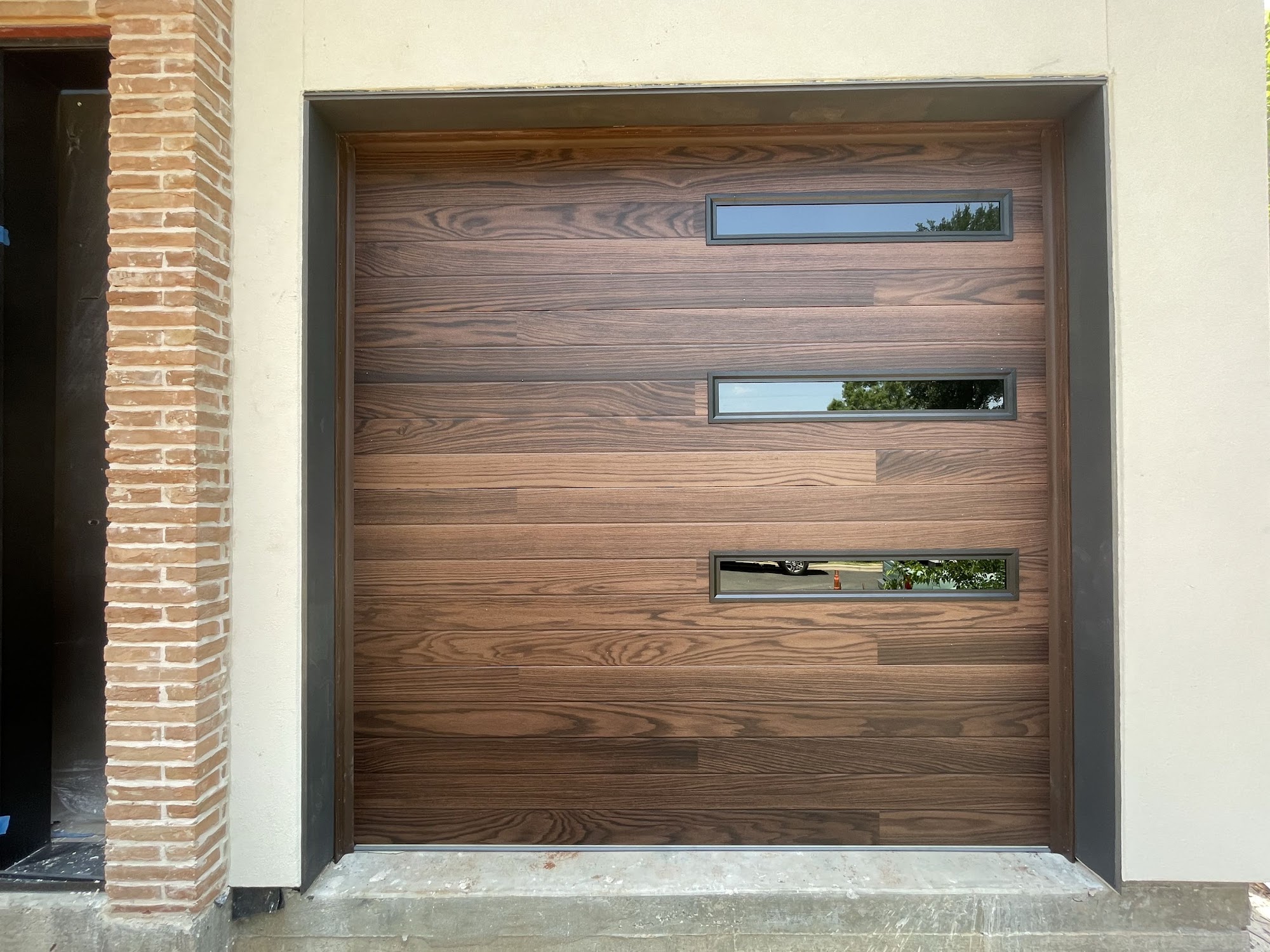
If you’ve got a wood or painted door, especially one facing south or west, our sun is relentless on it. Heat and the daily humidity swing make wood swell and shrink, which leads to warping, cracking, and peeling paint over time. A door that warps even slightly can start binding in its track and straining the opener.
Keeping the finish sealed and the door maintained goes a long way. We see plenty of beautiful custom wood doors on Hill Country homes, and the ones that hold up are the ones that get a little attention each year.
Lake houses and second homes have it worse
Around Horseshoe Bay, Kingsland, and the Lake LBJ communities, I see a specific pattern. A door on a weekend or vacation home sits unused for weeks, lubricant dries out, wasps move into the track and the sensor housings, and then the family shows up Friday night expecting it to work. Add lake humidity to the summer heat and you’ve got parts that seize and corrode faster than on an everyday door.
If you own a second home or a place you rent out, it’s worth having someone check the door before the busy season rather than getting a panicked call from guests. We cover the lake communities and the rest of the Marble Falls service area for exactly this kind of thing.
Get ahead of it: a twice-a-year rhythm
General advice says service a garage door once a year. In Texas, with this heat, I tell people twice. Once in the spring before the worst of the summer, and once in the fall after it. A garage door tune-up covers lubrication, a balance check, tightening the hardware, testing the safety reverse, and realigning sensors, all the things that quietly drift in the heat.
The honest pitch is simple. A maintenance visit costs a small fraction of an emergency call on a 105-degree Saturday, and it’s a lot less stressful than being locked out of your own garage with groceries melting in the car. That’s the Faster and the Humble in Better, Faster, Humble: catch it early, charge you fairly, keep you running.
Frequently Asked Questions
Why does my garage door only act up in the summer?
Heat causes metal to expand, sensors to drift, openers to hit their thermal cutoff, and lubricant to thin out. If your door misbehaves in the afternoon and recovers at night, heat is almost certainly the cause.
Should I insulate my garage door in Texas?
An insulated door helps keep the garage cooler, which is easier on your opener and anything stored in there. It also helps with energy bills if the garage shares a wall with living space. It’s worth considering on a replacement.
How often should I service my garage door in Texas?
Twice a year is my recommendation here, given the heat. Spring before summer and fall after. Lake and vacation homes may want a check before each busy stretch.
Why does my opener work at night but not at midday?
That’s the classic heat signature. The opener’s thermal protection or a sun-blinded sensor backs off once temperatures drop. It’s worth checking before it turns into a stranded afternoon.
Beat the heat before it strands you.
Call us at (830) 362-2763 or 830-251-4722, or reach out through our contact page. We answer the phone, we show up when we say we will, and we will tell you the truth about your door even when the truth is cheaper than you expected.
About the author: Shelby Palmer is the founder and lead technician of FixDoor in Marble Falls, Texas. He is a second-generation garage-door man who grew up in the trade his father built in Dallas-Fort Worth, and he has spent decades on the tools, on the phones, and consulting for some of the largest door companies in the country. He services the UL 325 safety compliance for Marble Falls Fire Rescue, and he runs FixDoor on a simple promise his customers know by heart: Better, Faster, Humble.