A healthy garage door is a quiet garage door. So when people ask me why their garage door is so loud, my real answer is that a noisy garage door is the door talking to you, and most homeowners tune that warning out until the morning it strands them in the driveway. I’m Shelby Palmer, founder of FixDoor here in Marble Falls. After a lifetime around these doors, I can usually name the problem from the sound alone before I ever see it. Let me teach you to do the same, because catching a noise early is the difference between a cheap tune-up and a tow-the-car emergency.
Squeaking or squealing (usually the cheapest fix)
A high squeak or squeal as the door moves is almost always dry parts. Rollers, hinges, and bearings need lubrication, and in our dusty Hill Country air they dry out faster than people expect. The fix is often just the right lubricant on the right parts, not a repair at all.
If your rollers are the old steel kind, this is also a good moment to think about upgrading to nylon rollers. They run quieter, they don’t need as much grease, and they’re easier on the whole system. Worn rollers are one of the most common things we swap during a rollers and track service.
Grinding or rumbling (look at the rollers and bearings)
A grinding or heavy rumbling sound is a step past squeaking. Now you’ve got rollers that are worn flat, bearings going bad, or a door starting to bind in the track. Left alone, a binding door drags on everything else, wears the opener, and eventually jumps the track.
This is the one I hate to see ignored, because grinding today is a roller and bearing job, but grinding ignored for six months becomes a bent track and a door off its rails. The cheap window closes fast.
A loud pop or bang (stop and pay attention)
A single sharp bang is different from the everyday sounds, and it deserves your full attention. The two usual suspects are a spring and a cable. A snapped spring makes a bang like a gunshot and leaves the door feeling impossibly heavy. A failing cable can pop and you’ll often see it hanging loose or the door sitting crooked.
Both of these are tension parts, and both are jobs for a trained tech, not a Saturday project. If you hear that bang, don’t keep hitting the opener. A broken cable or spring will only get worse, and forcing the opener can pile on damage. If your spring just let go, our guide to a broken garage door spring walks you through what to do next.
Rattling and vibrating (the easy DIY win)
A rattle or buzz as the door runs is often just loose hardware. Every cycle shakes the door a little, and over thousands of cycles the nuts and bolts on the hinges and brackets work themselves loose. Going around with a socket and snugging them up (not gorilla-tight, just firm) can quiet a door right down.
One caution. If the part that’s shaking is the opener rail or the motor unit up on the ceiling, leave that alone and have it looked at. A loose opener mount is not a tighten-it-yourself job.
Clicking, humming, or straining from the opener
When the noise is coming from the motor unit instead of the door, you’re usually hearing the opener struggle. A hum with no movement can mean a stripped gear or a tired capacitor. Clicking can be the chain or sprocket. Straining and slow movement can mean the opener is fighting a door that’s out of balance, which loops back to springs and rollers.
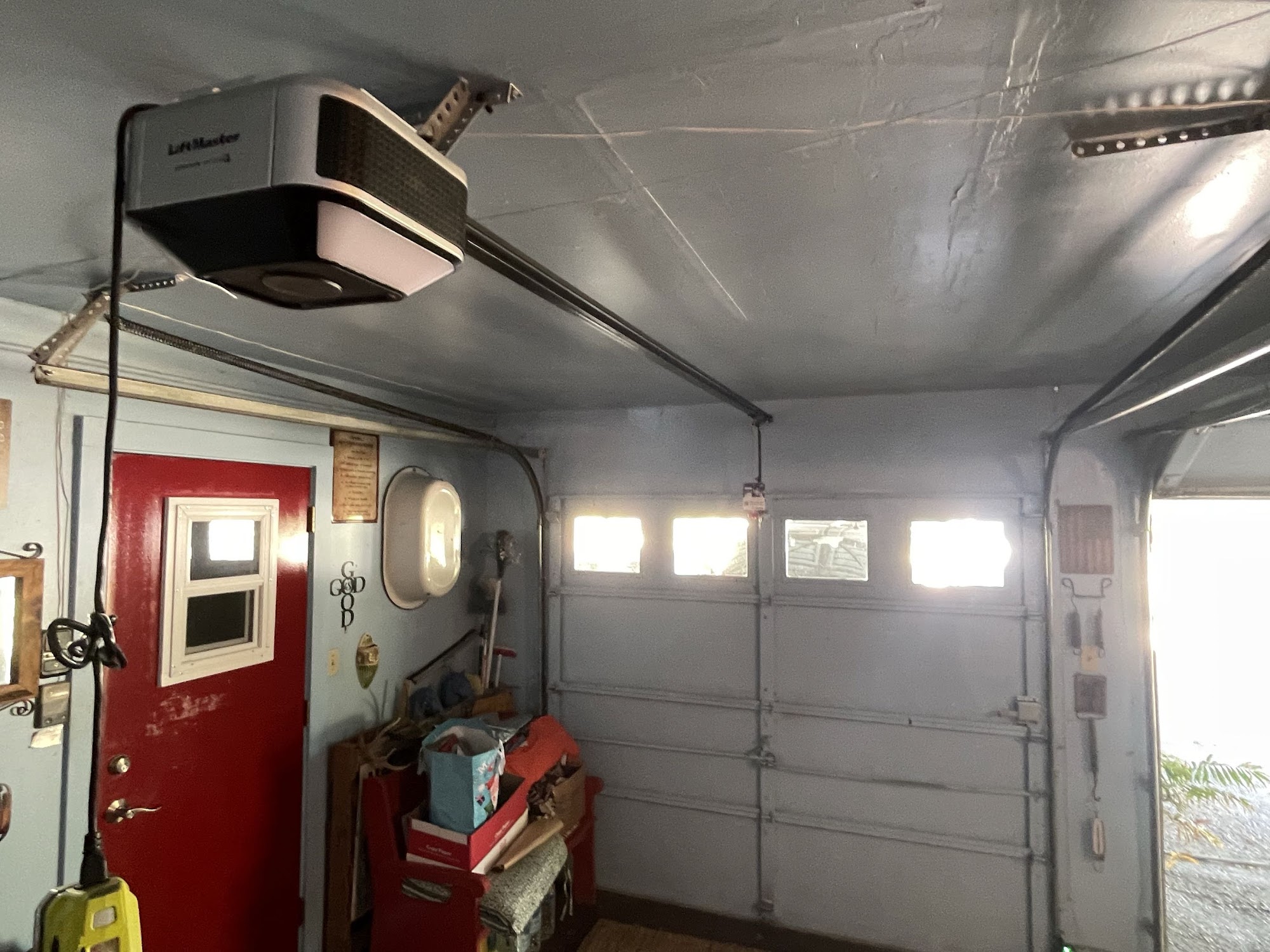
The fix here ranges from a simple garage door opener repair to a gear replacement. We installed and reprogrammed a stack of LiftMaster units around Marble Falls just last month, and most opener noises are fixable long before the motor is truly dead.
The 10-second test, and when to call
Here’s a quick check you can do yourself. Pull the manual release cord with the door closed, then lift the door by hand. A balanced door should glide up smoothly and stay put around waist height. If it slams down, fights you, or feels heavy, your springs are worn and your opener has been compensating. That’s the hidden cause behind a lot of noise.
The honest news is that most of what I’ve described is a tune-up, not a replacement. Lubrication, fresh rollers, tightened hardware, and a balance adjustment will quiet the majority of doors I’m called to. If you’d rather not chase it down yourself, a garage door tune-up covers all of it in one visit, and it costs a small fraction of an emergency call.
Frequently Asked Questions
Is a noisy garage door dangerous?
The noise itself isn’t, but it’s often the early warning for a part that is, like a worn spring or cable. Treat new or worsening sounds as a heads-up, not background noise.
What can I spray on a squeaky garage door?
Use a garage-door lubricant or white lithium grease on rollers, hinges, and bearings. Skip the WD-40 as a lubricant. It’s a cleaner and solvent, so it actually strips grease and the squeak comes back fast.
How often should I lubricate my garage door?
About twice a year for most homes, and a touch more often in our dusty, dry stretches. It’s five minutes that buys you a lot of quiet.
Why is my garage door louder in winter?
Cold thickens lubricant and makes metal contract, so dry or worn parts complain more on cold mornings. If a cold-weather noise is brand new, get it checked before it becomes a break.
Hearing something new from your door?
Call us at (830) 362-2763 or 830-251-4722, or reach out through our contact page. We answer the phone, we show up when we say we will, and we will tell you the truth about your door even when the truth is cheaper than you expected.
About the author: Shelby Palmer is the founder and lead technician of FixDoor in Marble Falls, Texas. He is a second-generation garage-door man who grew up in the trade his father built in Dallas-Fort Worth, and he has spent decades on the tools, on the phones, and consulting for some of the largest door companies in the country. He services the UL 325 safety compliance for Marble Falls Fire Rescue, and he runs FixDoor on a simple promise his customers know by heart: Better, Faster, Humble.